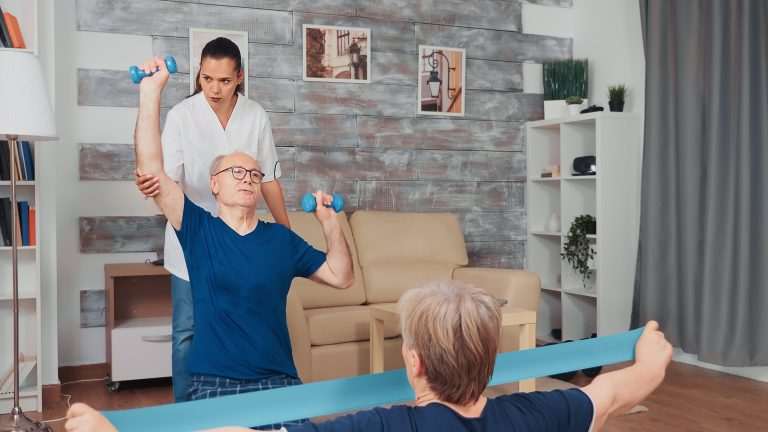
You leave your physio appointment feeling looser, lighter, and a little more hopeful. Then comes the handout: three or four exercises, a few sets of each, once or twice a day. Some of them look almost too simple to matter. A calf raise. A slow squat to a chair. Standing on one leg while you brush your teeth.
It’s fair to wonder why you need homework when you’re paying for treatment. The short answer is that the clinic visit starts the recovery, and the work you do between visits is what finishes it. Whether you’re dealing with a sore back from the office or rehabbing a rolled ankle through sports physiotherapy, your home program often matters as much as anything that happens on the treatment table.
Your Body Changes Between Appointments, Not During Them
Think about the math. A typical physio session lasts under an hour, maybe once or twice a week. That leaves more than 160 hours where your injured tissue is either getting what it needs to recover or not.
Muscles, tendons, and ligaments adapt to the loads placed on them. Give a healing tendon regular, controlled stress, and it gradually becomes stronger and more organized. Leave it resting too long, and it stays weak and irritable. That adaptation happens slowly, over days and weeks of consistent input. No single appointment can deliver that on its own.
Your exercises are how your physio keeps that process going when you’re not in the clinic.
Hands-On Treatment Opens a Window
Manual therapy, dry needling, and soft tissue work can reduce pain and improve movement, sometimes noticeably by the end of a session. But those effects tend to be temporary if nothing follows them.
It helps to think of hands-on care as opening a window. For a while afterward, you can move a stiff joint further or use a guarded muscle with less pain. Your home exercises take advantage of that window, teaching your body to use the new range and strength so it sticks. Skip them, and the stiffness often creeps back before your next visit.
Why the Exercises Look So Simple
Many people expect rehab to look like a hard workout. Instead, they get slow heel raises and balance drills that feel almost too easy. There’s a reason for that.
Early rehab is usually about precision, not intensity. Your physio may be targeting a specific muscle that’s switched off after an injury, retraining how your hip controls your knee, or restoring the balance reflexes that protect a sprained ankle. You build those skills through repetition, much like learning an instrument. The movement has to become automatic before it can hold up under a heavier load or a faster pace.
As you improve, the exercises should progress. More resistance, more complexity, less support. If your program hasn’t changed in several weeks, it’s worth asking about.
What Happens When People Skip Them
We see a few common patterns when home programs fall by the wayside:
- Progress stalls: Pain improves during the visit, then returns within days, and recovery seems to plateau.
- Symptoms fade, but the weakness stays: People often stop exercising once pain settles, even though strength and control haven’t fully returned. That’s a common setup for re-injury.
- More visits are needed: Without consistent work at home, it simply takes longer and more appointments to reach the same result.
The opposite is also true. Patients who stay consistent often need fewer sessions overall, which saves time and money.
Is It Supposed to Hurt?
Some discomfort during rehab exercises can be normal, particularly with tendon problems or after surgery. Many physiotherapists use a simple guideline: mild to moderate discomfort during exercise is often acceptable if it settles within a day and doesn’t leave you worse the next morning.
Sharp pain, pain that builds with each set, or symptoms that linger into the following day are signs to ease off and let your physio know. Your program should be adjusted to you, not pushed through at any cost.
Making Your Home Program Easier to Stick With
A few habits make a real difference:
- Attach exercises to something you already do, like morning coffee, brushing your teeth, or the evening news.
- Ask your physio to film the key exercises on your phone so you’re not guessing about form.
- Keep a quick log. A note on your phone showing what you did and how it felt gives your physio valuable information.
- Speak up if something isn’t working. If an exercise is too painful, too easy, or doesn’t fit your schedule, there’s almost always an alternative.
Your home program isn’t a test. It’s a tool, and it works best when it fits your real life.
The Goal Is Independence
The best outcome of physiotherapy isn’t just feeling better. It’s understanding your body well enough to keep yourself healthy once treatment ends. That’s especially true in sports physiotherapy, where the aim is to get you back to running, skating, or playing without the same injury returning next season. The exercises you learn now often become part of your long-term routine for staying strong and injury-resistant.
How We Support Your Recovery at Scona Sports Physiotherapy
At our clinic on 10427 80 Avenue, just off Whyte Ave in Edmonton, every session is one-on-one with your therapist. We start with a thorough assessment, then build a treatment plan around your goals, combining hands-on care with exercises you’ll actually understand and be able to do at home.
Our team includes physiotherapists, chiropractors, and massage therapists, and we offer sports physiotherapy alongside care for back and neck pain, post-surgical rehab, concussion, and more. You don’t need a doctor’s referral to see us; we direct bill most major insurers, and same-day and next-day appointments are often available. If you’re ready to get moving again, call us at 587-324-7057 or book online.